

Key Takeaways
- Why land title problems are often discovered long after a purchase is complete
- How common title issues typically originate without obvious warning signs
- What reviewing ownership records helps you understand before you commit to land
Why are title problems not obvious?
You see a parcel of land online and say, “Wow, that looks good; I want to visit it.”
You drive to the property, see the beautiful mountains, and envision putting your dream home one day.
What the great view doesn’t show you is whether the person who is wanting to sell you the property is the legal owner of the property.
Title issues exist entirely outside the physical boundaries of the property.
Because nothing appears broken or missing on the land itself, it can feel reasonable to assume ownership history is straightforward. In reality, title clarity depends on documentation rather than observation.
What kind of title issues can come up?
Land title complications often stem from administrative gaps rather than dramatic disputes.
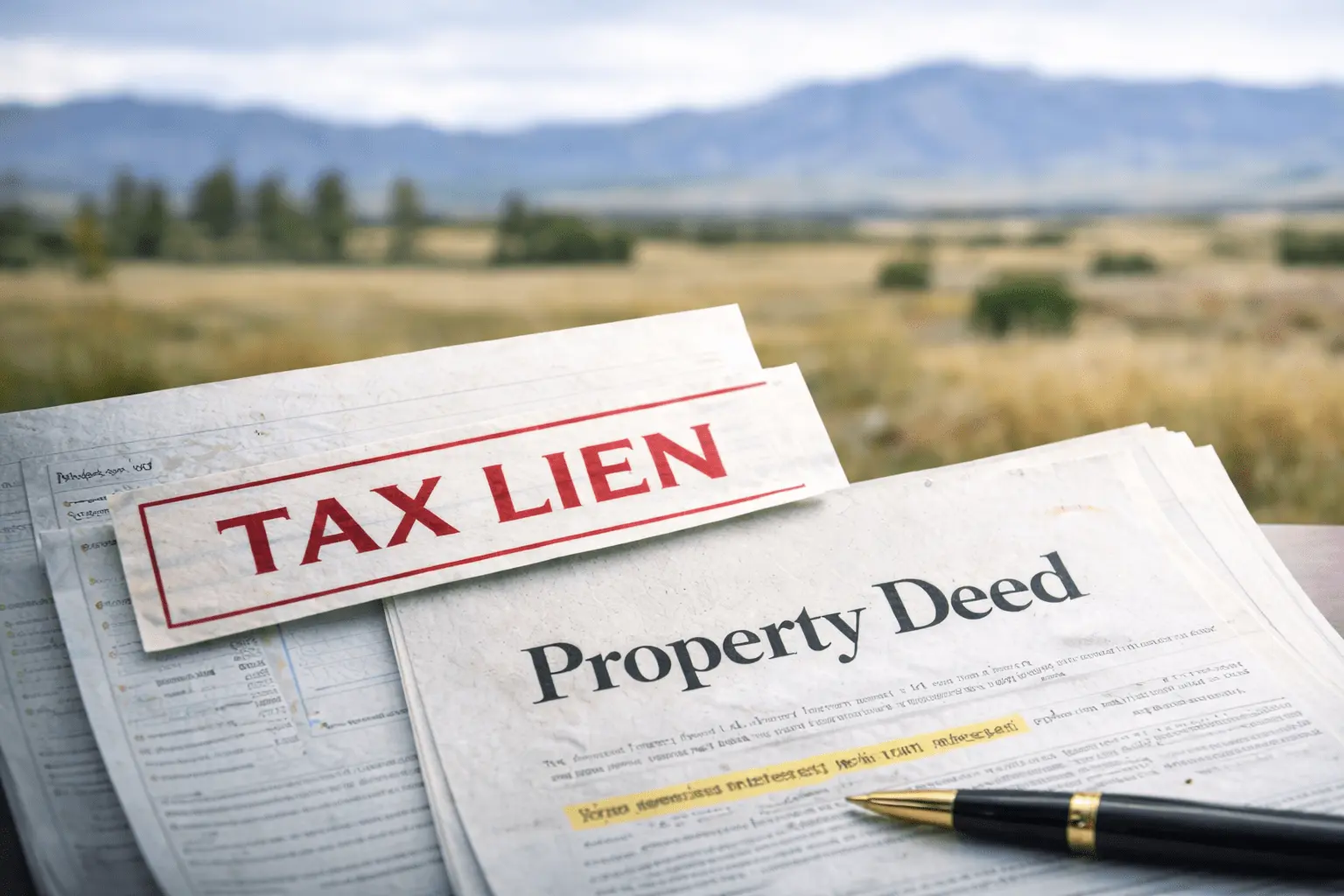
These may include unpaid property taxes carried forward from a previous owner, incomplete transfers between family members, errors in recorded legal descriptions, or unresolved claims tied to earlier transactions. In some cases, easements or access rights were informally used but never formally documented.
These situations are not uncommon in land that has been held for long periods or transferred without regular updates to public records.
Why are title issues usually discovered later rather than sooner?
If you buy a property with what is known as a “defective title”, you might not know until it is too late.
Without doing a title search, if you attempt to sell the land, apply for financing, change its use, or transfer it to someone else, it will often trigger someone else doing a title review and discovering the issue.
Note that when I first started in the land business, I ‘bought’ a property in Arizona from a lovely couple who lived in Washington. They ‘owned’ the property for 30 years when the wife inherited it from her aunt.
Unbeknownst to her, the deed was not recorded correctly, as it didn’t account for the other heirs who could claim ownership to the title.
As such, they didn’t have the legal authority to sell it to me.
At the time, I didn’t do comprehensive title searches and didn’t figure this mistake out until after.
The couple were lovely people and refunded me when I pointed out the issue, but others might not be so kind.
How does reviewing title records change your understanding of the land?
Reviewing title records shifts your attention from the property to its history.
Rather than assuming continuity of ownership, the review process allows you to understand how the land has been recorded, whether obligations remain attached to it, and whether prior transfers were completed correctly.
At Smart Land Investors, the emphasis is always on understanding the land as it exists on paper, not just how it appears in person. Records provide context that the land itself cannot.
What does a measured approach to title review look like?
A measured approach allows time for verification.
It involves examining public records, confirming tax status, and understanding how boundaries and access are legally defined. This process does not guarantee that issues will never arise, but it reduces the likelihood of discovering surprises later.
There are a number of steps you can take to protect yourself.
You can require the transaction to go through a Title Company that will provide title insurance.
While this is the safest option, I actually don’t recommend it on transactions less than $10,000, given that title and escrow fees can easily surpass $1,000 for both the buyer and seller.
Instead, you can order due diligence reports from platforms like Fiverr, contact title companies and ask what they charge for a ‘preliminary title report’, or hire what is known as an “abstractor” who can conduct a title search for a few hundred dollars.
Always request that the seller provide you either a “Warranty Deed” or “Special Warranty Deed”, which basically says they stand behind the title being clean and are willing to defend you if an issue comes up.
What should you take away when thinking about title risk?
As Ronald Reagan said, we should “trust but verify.”
Title issues are rarely dramatic, but they can be consequential.
They usually reflect incomplete information rather than intentional problems. Knowing this can help you approach land ownership with a clearer understanding of where attention is most useful.
Some buyers value this level of review more than others. What matters is choosing an approach that aligns with how you prefer to hold and manage land over time.
At Smart Land Investors, we take issues of title very seriously and always offer Special Warranty Deeds. If you have questions about our approach or a title issue you are facing, feel free to email me at joshua@smartlandinvestors.com.